
Spotting wildflowers in the Southwest
 By Pemberton Visitor Centre | 3/6/2026
Western Australia’s South West bursts into colour each spring as the region’s wildflower season reaches its peak, making it one of the most spectacular natural displays in the country. The annual wildflower festivals celebrate this transformation, drawing visitors who come to wander through forests, coastal heathlands, and national parks blanketed with vibrant blooms. From delicate pastels to bold, fiery tones, the landscape becomes a living canvas that shifts with every change in soil, rainfall, and sunlight.
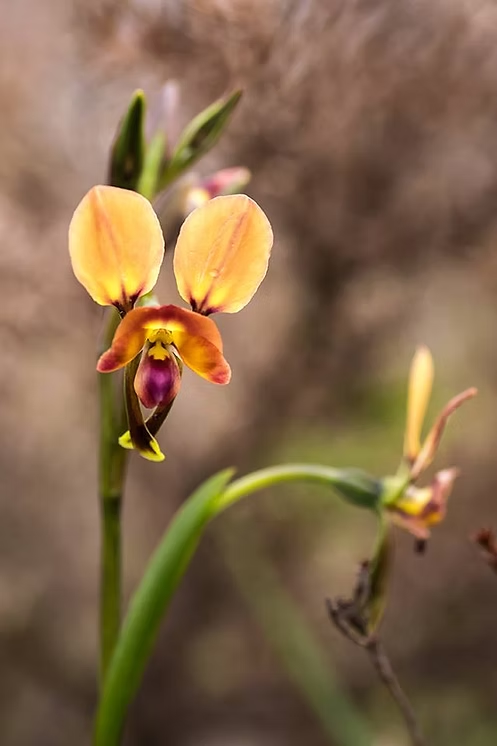
Among the most treasured highlights of the season are the South West’s orchids—tiny, intricate, and often hidden treasures that reward those who take the time to look closely. Species such as the Queen of Sheba, the Spider Orchid, and the Donkey Orchid captivate enthusiasts with their unusual shapes and striking colours. Many of these orchids are endemic to the region, making the South West a hotspot for botanists, photographers, and nature lovers eager to spot rare and elusive varieties. Guided walks and local events often help visitors discover these gems while learning about their fragile ecosystems.
The wildflower festivals not only showcase the beauty of the region but also celebrate the deep connection between community, culture, and country. Markets, exhibitions, and educational activities bring people together to appreciate the biodiversity that makes the South West so unique. Whether you’re exploring trails, joining a festival event, or simply enjoying the colours along the roadside, the season offers a chance to slow down and reconnect with nature.
The Southwest of Western Australia is one of the world’s biodiversity hotspots, with thousands of plant species found nowhere else. Here are some iconic wildflowers that are endemic (only naturally found) to the southwest of WA:
- Red and Green Kangaroo Paw – WA’s floral emblem, famous for its striking red and green flowers.
- Qualup Bell – A spectacular pink-and-cream bell-shaped flower found in sandy heath.
- Blue Lady Orchid – A vibrant blue orchid that blooms in spring.
- Queen of Sheba Orchid – One of WA’s most distinctive orchids with richly patterned flowers.
- Menzies’ Banksia – A stunning banksia with red and gold flower spikes that provides nectar for birds.
- Albany Pitcher Plant – A fascinating carnivorous plant found naturally only in the southwest of WA.
- Southern Cross – A delicate white wildflower named for its star-like shape.
- Scarlet Featherflower – One of the spectacular featherflowers, known for its fringed scarlet blooms.
One of the most interesting facts is that around 80% of the Southwest’s flowering plant species occur nowhere else on Earth. This extraordinary level of endemism is why the region is recognised as a global biodiversity hotspot. Many species evolved in isolation over millions of years on ancient, nutrient-poor soils, leading to remarkable diversity in colour, shape and survival strategies.
That makes a great National Science Week message:
Every wildflower you spot in WA’s Southwest could be part of a story found nowhere else on Earth. These ancient landscapes have shaped plants that exist only here, making every spring walk a chance to experience a globally significant natural treasure.
If you’re looking for the best wildflower displays in the Southern Forests, these are the standout locations from August to November, with different habitats flowering at different times.
Pemberton
- Gloucester National Park – Karri forest understorey comes alive in spring with orchids, hibbertias, native wisteria, sundews and many endemic shrubs.
- Beedelup Falls – Excellent for orchids, mosses and moisture-loving wildflowers along the walking trails.
- Big Brook Dam Foreshore & Picnic Area – A mix of forest species and colourful spring blooms around the walking circuit.
- The Karri Forest Explorer Drive is one of the best self-drive routes for stopping and discovering flowering plants throughout the season.
Northcliffe
Northcliffe is one of Western Australia’s premier wildflower destinations, with more than 2,000 native plant species recorded in the district. The variety comes from karri forest, jarrah woodland, coastal heath and wetlands all within a short drive.
Top spots include:
- Understory Art & Nature Trail
- Northcliffe Forest Park
- Marri Meander
- Bardi Creek Trail
- Lane Poole Falls Trail
Windy Harbour & D’Entrecasteaux National Park
This area offers some of the most spectacular coastal wildflower displays.
Look around:
- Point D’Entrecasteaux
- Mount Chudalup Summit Trail – A 2 km return climb
- Windy Harbour coastal heath
- Coodamurrup (4WD)
- Fish Creek (4WD)
The coastal heath flowers in waves from September through November, so every visit can reveal different species.
Quinninup
Around Quinninup you’ll find beautiful spring displays in:
- Karri Lake Trail
- Wildflower Orchid Trail
- King Karri Trail
October is usually the peak month as orchids, native peas and flowering shrubs emerge beneath the towering karri trees.
Manjimup District
The wider Manjimup area is fantastic for:
- Tone-Perup Nature Reserve
- Unicup
- Lake Muir Nature Reserve
- Diamond Tree area
- King Jarrah Walk Trail
These areas are known for heathland species, banksias, featherflowers, triggerplants and a remarkable diversity of orchids.
For photographers, the best time is usually:
- Late August–September: orchids, wattles and early forest flowers.
- September–October: peak diversity across Pemberton, Quinninup and Northcliffe.
- October–November: coastal heath around Windy Harbour and Point D’Entrecasteaux reaches its most colourful displays.
Categories:
- Adventure
- Art
- Events
- Family Fun
- Flora
- Intineraries
- Tours
- Trails
- Wellness